top-news
Japan Records Biggest World Cup Win in Team History, but Can't Avoid Tough Knockout Clash
Japan Records Biggest World Cup Win in Team History, but Can't Avoid Tough Knockout Clash
By Song Chengliang, The Paper
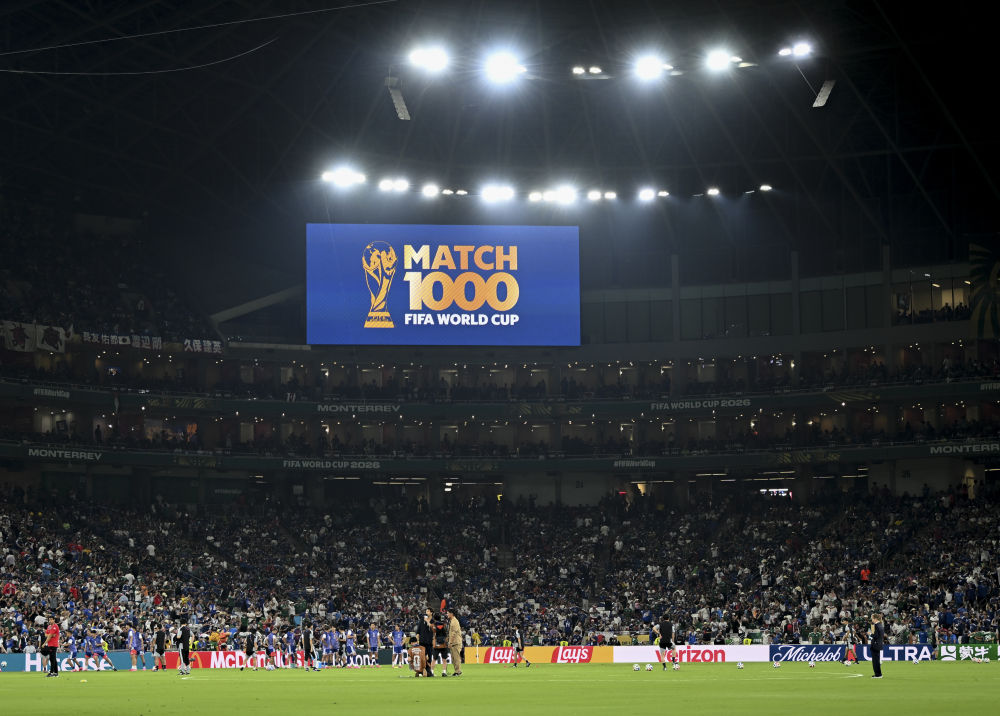
In the 1,000th match in World Cup history, Japan's national team also made history of their own — a 4-0 rout of Tunisia represents Japan's largest margin of victory ever at a World Cup.
With this win, Japan has essentially secured their place in the knockout stage. However, based on the tournament bracket, Japan is likely to face a top-tier opponent in the first knockout round. To go further, Hajime Moriyasu's team will need to deliver in the elimination rounds.
Japan's campaign began with a 2-2 draw against the Netherlands after twice coming from behind, though they lost attacking midfielder Takefusa Kubo to injury. The match against Tunisia was a must-win, or their final group match against Sweden would become a do-or-die affair.
Facing a Tunisian side that had lost 5-1 in their opener, Japan rotated some starters but still dominated comprehensively. Daichi Kamada opened the scoring in the 4th minute, Eredivisie top scorer Ayase Ueda scored twice, and veteran Junya Ito added another goal for the 4-0 victory.
This marks Japan's largest World Cup victory. Since their first World Cup appearance in 1998, Japan has played 27 World Cup matches with a record of 8 wins, 5 draws, and 14 losses. Among their previous seven wins, Japan had never won by more than two goals — 2-0 against Tunisia in 2002 and 3-1 against Denmark in 2010. This was also the first time Japan scored four goals in a single World Cup match.
Following the match, Japan gained 15.32 points in the live FIFA rankings, rising to 16th in the world. Goalkeeper Zion Suzuki became the second Japanese goalkeeper to keep a clean sheet while facing zero shots on target at a World Cup — the first was Seigo Narazaki against Tunisia in 2002. At 33 years and 103 days old, Junya Ito set a new record as Japan's oldest World Cup goalscorer, surpassing Keisuke Honda who scored against Senegal in 2018 at 32 years and 11 days. Substitute Keisuke Goto became Japan's second-youngest World Cup player at 21 years and 17 days.
Coach Moriyasu credited the team's strong start for the victory. "During preparation, the coaching staff clearly defined what needed to be done. The players weren't constrained by the opponent and fully expressed what they wanted to do, playing at their level courageously — that was excellent."
Two-goal scorer and assist provider Ayase Ueda said: "I finally feel relieved. I had very regrettable experiences at the last World Cup, and this time I've finally swept away that gloom. After a hard-fought draw in the opener, we all felt we had to take three points. I'm happy to have contributed to the team."
After this round, Netherlands and Japan both have 4 points in Group F. Netherlands lead on goal difference (7-3 vs 6-2), while Sweden sit third with 3 points. In the final round, Japan face Sweden while Netherlands take on winless Tunisia.
According to the tournament bracket, Group F and Group C (Brazil's group) are paired for the knockout stage: F2 vs C1 and F1 vs C2. Assuming no major surprises, Brazil and Morocco will finish top two in Group C, meaning Japan and the Netherlands would face Brazil and Morocco respectively.
If Japan were to lose to Sweden and finish third in the group, they could potentially face Group E winners Germany, Group A winners Mexico, Group I winners (likely France or Norway), Group D winners USA, or Group B winners (Canada or Switzerland). Arguably, a third-place finish might even present a more favorable matchup for Japan.
Japan have remained unbeaten in nine matches across all competitions (7 wins, 2 draws) since losing 2-0 to the United States last September, including a six-match winning streak featuring victories over Brazil and England. At the previous World Cup, Japan famously defeated both Spain and Germany in the group stage.
However, Japan's knockout stage record at World Cups is abysmal. In all four previous appearances beyond the group stage — including the 2002 tournament they co-hosted — Japan have been eliminated in their first knockout match. With this year's tournament expanded to 48 teams, the first knockout round has expanded from the round of 16 to the round of 32, but Japan's draw guarantees they will face a strong opponent. Can Moriyasu and his team finally break their knockout stage curse?
Originally published by The Paper (澎湃新闻)