business
Longitude & Latitude: Nurturing Scenarios, Unblocking Bottlenecks for Comprehensive Auto Consumption Expansion
Launching pilot programs for automobile circulation and consumption reform, and cultivating and expanding the auto aftermarket are key levers for comprehensively boosting auto consumption in China. On June 23, the Ministry of Commerce and other departments issued two notices to intensify efforts to expand auto consumption across the entire chain.
As of now, China's automobile保有量 has reached 370 million vehicles, with auto sales ranking first globally for 17 consecutive years. This massive existing base means the main battleground for auto consumption is shifting from “buying new cars” to “using cars well.” When a car reaches the consumer, it is only the starting point. The subsequent consumption scenarios — modifications, maintenance, rentals, camping, motorsports — still hold enormous untapped potential.
The successive release of the two documents is equivalent to simultaneously activating two engines: “cultivating consumption scenarios” and “improving policy supply,” opening up new possibilities for future auto consumption.
40 Cities Selected as Auto Circulation & Consumption Reform Pilot Cities
Automobiles are durable consumer goods. For an average household, a car is the second-largest consumer asset after real estate. Carrying out auto circulation and consumption reforms helps further stimulate the vitality of the auto consumption market and promote high-quality development of the auto market.
As early as the beginning of last year, multiple government departments explicitly proposed launching pilot reforms for auto circulation and consumption from 2025 to 2027, encouraging qualified localities to deepen reforms, innovate, and pilot initiatives across new cars, used cars, scrapped vehicles, and the auto aftermarket, focusing on management systems, standards, technology, and data platforms.
This time, the Ministry of Commerce and seven other departments issued a notice announcing 40 pilot cities for auto circulation and consumption reform, along with their key reform and innovation directions. For example, Beijing Chaoyang focuses on auto modifications, Shanghai Jiading focuses on classic/traditional vehicles, Anhui focuses on a new integrated auto production-sales management service model, Liaoning Shenyang focuses on used car circulation, Jiangsu Yangzhou focuses on RV camping, and Shaanxi Weinan focuses on scrapped vehicle recycling.
The notice requires each pilot city to combine its local industrial characteristics, market conditions, resource endowments, geographical advantages, and functional positioning to address bottlenecks such as unreasonable restrictions on auto circulation and consumption, improve reform and innovation measures, and cultivate new scenarios, new business formats, and new models for auto consumption, driving integrated development of commerce, tourism, culture, sports, and health.
Vice Minister of Commerce Sheng Qiuping stated at a press conference that this policy deployment focuses on revitalizing existing stock while optimizing增量; it aims to both “manage well” and promote “liberalization.” It deepens the transformation of auto consumption from purchase management to usage management, accelerating the relaxation of restrictions in areas such as used car transactions, RV camping, and pickup truck access to cities where conditions permit. It is expected that future auto consumption scenarios will be more diverse and circulation will be more convenient.
Auto Aftermarket Becomes a “New Blue Ocean” for Consumption
As auto consumption becomes increasingly popular, cars are rapidly evolving from mere transportation tools to “intelligent mobile living spaces.” The auto aftermarket, driven by car usage, contains enormous development potential.
On the same day, the Ministry of Commerce and eight other departments issued a notice on measures to cultivate and expand auto aftermarket consumption. The notice proposes 17 measures across six areas: developing auto modifications in a regulated and orderly manner, supporting the RV camping industry, cultivating new business formats for classic/traditional vehicles, optimizing auto repair and insurance services, actively developing auto racing and motorsports, and promoting innovative and integrated development of car rentals.
In detail, auto modifications have long been in a gray area. The new policy clearly implements tiered and categorized management, determines a list of modification items, and improves vehicle inspection and change registration requirements. RV travel faces difficulties on the road and in parking; the measures propose optimizing traffic management policies and setting up dedicated RV parking spaces in public lots. Classic/traditional vehicles (commonly referred to as vintage or classic cars) previously lacked legal status; the policy supports pilot cities exploring circulation, trading, and conditional road access.
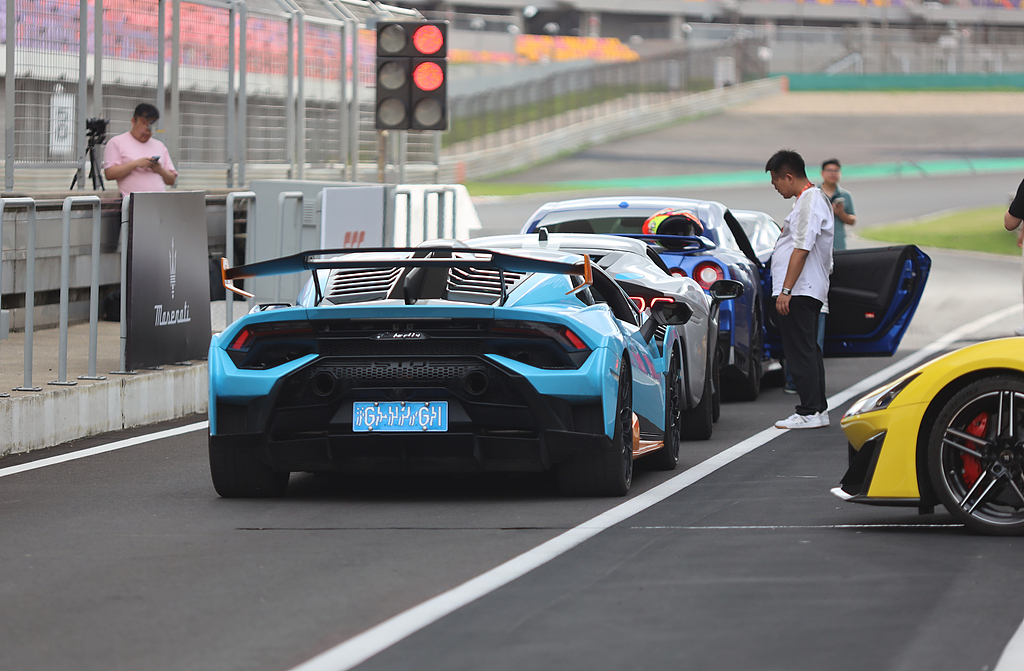
Taking auto racing as another example: the document supports relevant auto circulation and consumption reform pilot cities in introducing internationally renowned auto events according to local conditions, and encourages the development of rally races, off-road races,集结赛, go-kart races, and track events to create experiential racing activities for the public.
According to a report by an international professional institution, the global auto aftermarket has exceeded one trillion USD, and the Asia-Pacific region is expected to become the world’s largest regional market this year. With policy support, China will also enter a period of rapid growth in the auto aftermarket, becoming a “new blue ocean” for improving people’s livelihoods and expanding consumption.
China’s Auto Market’s Long-Term Positive Fundamentals Remain Unchanged
Since the beginning of this year, auto consumption growth has faced阶段性 pressure due to multiple factors. However, in the long run, China’s auto market’s positive fundamentals remain unchanged, with broad development space and strong resilience.
At the same time, with slowing industry growth and insufficient profitability among automakers, how to achieve structural optimization and deepen the existing stock, and how to explore new markets and find new growth drivers, have become new challenges. Cultivating and strengthening the auto aftermarket, transforming cars from mere transportation tools into a lifestyle, is undoubtedly one of the breakthrough directions.
The center of gravity of the auto industry’s value chain is shifting toward the后端. Strengthening and optimizing the auto aftermarket can greatly extend the auto consumption chain and increase industrial added value. The release of the two documents, from a full-chain perspective, extends auto consumption from simple transactions to broader areas such as usage, services, and culture. This is both a profound supply-side structural reform and a positive response to the public’s demand for a better life.
Recently, the Ministry of Industry and Information Technology and the Ministry of Public Security jointly issued a notice that motor vehicle certificate information will now be shared in real time, allowing domestic passenger cars to achieve “same-day purchase, same-day tax payment, same-day license plate registration.”
These measures address car owners’ pain points, helping to unblock consumption bottlenecks from both policy and service perspectives, reducing costs for enterprises and saving the public from running around, thereby optimizing the consumption experience and stimulating the vitality of the auto consumption market.
("“Longitude & Latitude” is an economic commentary IP created by The Paper, using mainstream media expressions to help build China’s economic discourse and narrative system.)