top-news
Neighbor Who Cared for Disabled Man for Decades Granted Guardianship by Court
Neighbor Who Cared for Disabled Man for Decades Granted Guardianship by Court
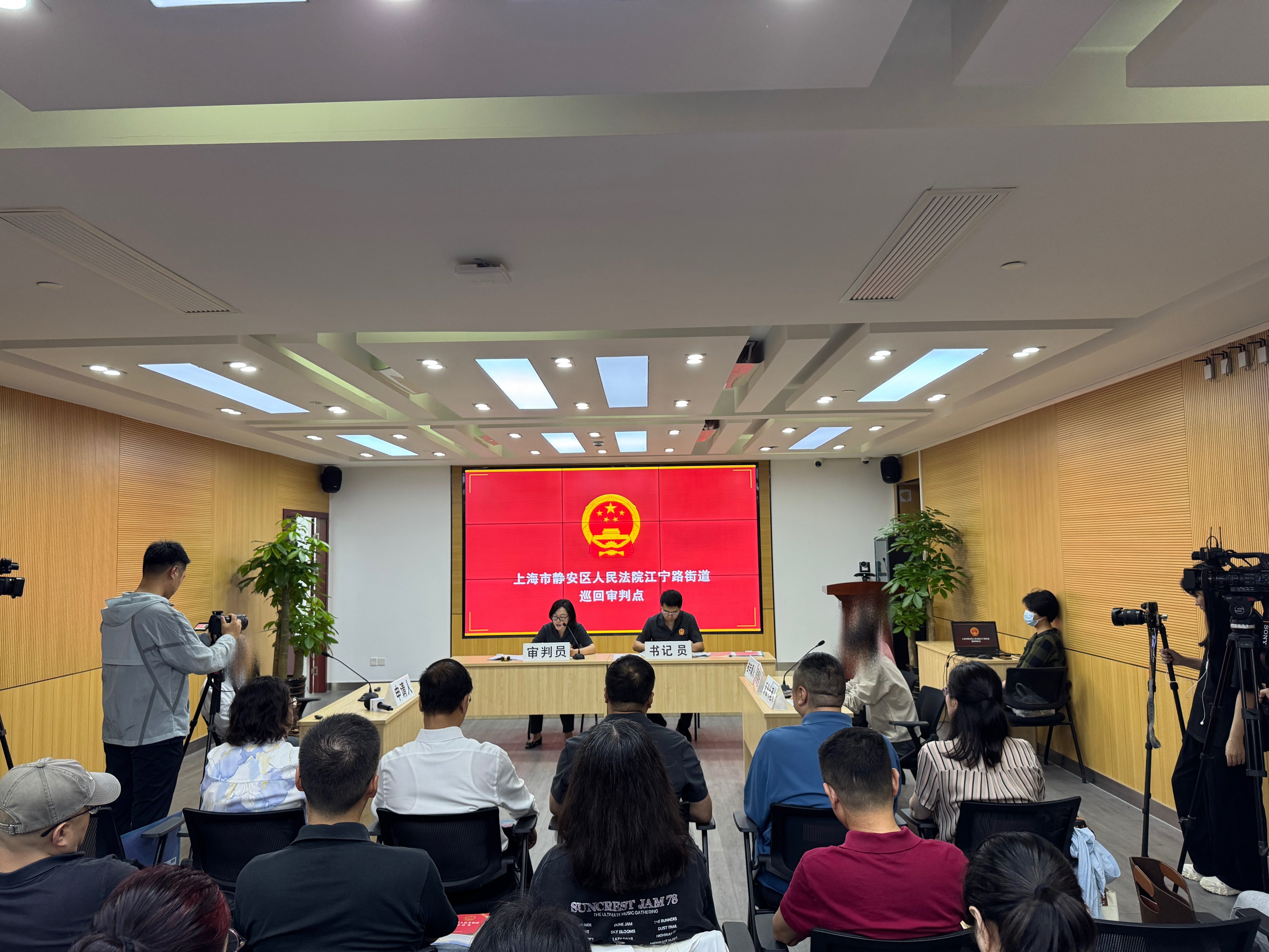
As the gavel struck, a巡回 trial for a non-relative applying for guardianship began.
Mr. Xu, a 56-year-old unmarried man with mental disabilities since childhood, was identified as a person with limited civil capacity. Since his parents worked in other regions, his neighbor Old Mr. Liang's parents had been taking care of him about 40 years ago. In 2007, Mr. Xu moved into a nursing home, with Old Mr. Liang handling his daily affairs. Both of Mr. Xu's parents have passed away, and his only sister died in 2025. To better care for Mr. Xu, Old Mr. Liang applied to become his legal guardian.
On the morning of June 24, 2026, this case of a non-relative seeking guardianship was heard as a巡回 trial in the community by the Shanghai Jing'an District People's Court (hereinafter referred to as Shanghai Jing'an Court). The Paper learned from the trial that the court ultimately supported Old Mr. Liang's application. On the same day, the court jointly issued with Jiangning Road Subdistrict Office the "Jiangning Road Subdistrict Non-Relative Guardianship Operational Procedure Guidelines (Trial)", providing a clear operational manual for community-level non-relative guardianship work.
Non-relative Applies for Guardianship
Shanghai Jing'an Court revealed that Mr. Xu's parents have both died, and his only sister, also unmarried and childless, died of illness in 2025. Since 2007, Mr. Xu has been receiving professional care at a nursing home. Old Mr. Liang, 71, is Mr. Xu's next-door neighbor. Because Mr. Xu's parents worked far away in Xinjiang, Old Mr. Liang's parents had been taking care of Mr. Xu's daily life for decades. After Old Mr. Liang's parents passed away, he took over the responsibility, helping Mr. Xu apply for subsidies, pay nursing home fees, and handling other matters with which he is familiar.
More urgently, after Mr. Xu's sister died in another city, her ashes remained unattended, requiring Mr. Xu to handle the arrangements. Seeing that Mr. Xu had no eligible relatives to rely on, Old Mr. Liang expressed his willingness to serve as guardian to the Sanxingfang Neighborhood Committee in Jiangning Road Subdistrict, Jing'an District, where Mr. Xu is registered, and submitted an application to the court.
However, non-relative guardianship lacks both blood ties as a natural bond and clear operational procedures — what documents should the applicant submit? How should the neighborhood committee verify? How should the court review and appoint? Who oversees after the appointment?
Presiding Judge Bai Yun, Chief Judge of the Comprehensive Trial Division for Minors and Family Cases of Jing'an District People's Court, decided to conduct a巡回 trial to fully demonstrate the trial procedures, evidence requirements, and judgment standards for non-relative guardianship cases. During the trial, Bai Yun reviewed the core facts and legal applications, and ruled on the spot to appoint Old Mr. Liang as Mr. Xu's guardian.
Extensive Preliminary Work Behind the Verdict
In fact, while the law provides a basis for neighbors and friends without blood ties to assume guardianship responsibilities, practical implementation lacks a clear path. Behind the single verdict lies extensive preliminary work by Mr. Xu's neighborhood committee.
Ma Tingting, Party Branch Secretary and Director of the Sanxingfang Residential Neighborhood Committee in Jiangning Road Subdistrict, explained that Mr. Xu's guardianship issue originally involved three difficulties. First, as a person with limited civil capacity, Mr. Xu cannot independently manage his 1.5 million yuan relocation compensation and property. The neighborhood committee also lacks authority to manage these assets, which had long been滞留 with the relocation office, exposing them to potential loss. To address this, the committee proactively reported to the subdistrict office and coordinated with multiple departments including the relocation office, civil affairs bureau, judicial office, legal aid center, and public security bureau, holding joint coordination meetings to form a unified, clear, and actionable asset management plan.
Second, although Old Mr. Liang has been caring for Mr. Xu long-term, he is not the legal priority guardian. Mr. Xu's long-estranged sister, who also suffers from mental illness, remained the first-priority guardian. Therefore, the committee acted lawfully without overstepping, maintaining daily care and humane concern for Mr. Xu, and precisely coordinated with the judicial system after his sister's death to ensure lawful and compliant guardianship.
Third, the committee's investigation results could only serve as work references, not judicial evidence. The committee could not independently complete professional investigations such as kinship tracing or asset ownership verification. To resolve this, the committee relied on the subdistrict judicial office and professional lawyers to conduct legal due diligence on kinship, ultimately providing legally valid conclusions to support judicial proceedings.
"We have deeply realized that non-relative guardianship is not simply about issuing a certificate. It requires acting according to law and ensuring lawful and compliant guardianship," Ma Tingting said. After a series of preliminary efforts and upon receiving Old Mr. Liang's application, the committee immediately initiated verification procedures, contacting and confirming one by one that Mr. Xu indeed had no eligible relatives. They also confirmed that Old Mr. Liang and Mr. Xu had been neighbors for many years, with verifiable records of daily care, and positive feedback from community police and neighbors. Ultimately, the committee held a collective review meeting and issued a consent certificate.
From Individual Case to Institutionalized Practice
In fact, the difficulties faced by this single case precisely reflect the challenges of implementing non-relative guardianship — on the surface, it is a shortage of people; in essence, it is a shortage of systems. Without systems, community workers dare not and do not know how to proceed; applicants do not know how or where to apply; and without grassroots pre-screening, court review efficiency is also compromised.
To further explore non-relative guardianship work, on June 24, Shanghai Jing'an Court and Jiangning Road Subdistrict Office jointly released the "Jiangning Road Subdistrict Non-Relative Guardianship Operational Procedure Guidelines (Trial)," establishing a six-step closed-loop working method: Applicant submits application — Neighborhood Committee investigates and verifies — Issues consent certificate — Court adjudicates and appoints — Post-judgment follow-up care — Dynamic adjustment. The配套 standardized work templates included in the guidelines also provide community workers with practical solutions to real-world problems.
From application to judgment, from supervision to adjustment, a chain of institutional systems is gradually unfolding, transforming non-relative guardianship from individual case exploration into systematic, rule-based practice. Bai Yun revealed that, starting from Jiangning Road Subdistrict, the improvement of non-relative guardianship systems at the Jing'an District level is also underway.