top-news
Woman Claims She Paid 160,000 Yuan to Sinopec Gas Station Employee for Peanut Oil, Fails to Get Delivery; Branch Responds
A woman surnamed Liu from Linyi, Shandong, reported to The Paper's public interaction platform "Service Pai" (https://tousu.thepaper.cn) that she had transferred 160,000 yuan (approximately US$22,000) to an employee named Wang of Sinopec Sales Co., Ltd. Yantai Petroleum Branch Fushan No. 15 Gas Station to purchase 400 boxes of peanut oil, only to discover later that she could not get the goods.
On June 24, a staff member from Sinopec Yantai Petroleum Branch responded, stating that the employee involved, Wang, had indeed worked for the company, but they were not sure whether he was still employed. The company's relevant leadership was handling the matter.
Recently, Ms. Liu told The Paper that she had previously purchased cooking oil, alcohol, and other goods multiple times through a staff member surnamed Wen from Fushan No. 62 Gas Station. On June 15, through Wen's introduction, Ms. Liu met Wang, an employee of Fushan No. 15 Gas Station, who told her about a batch of discounted peanut oil for sale.
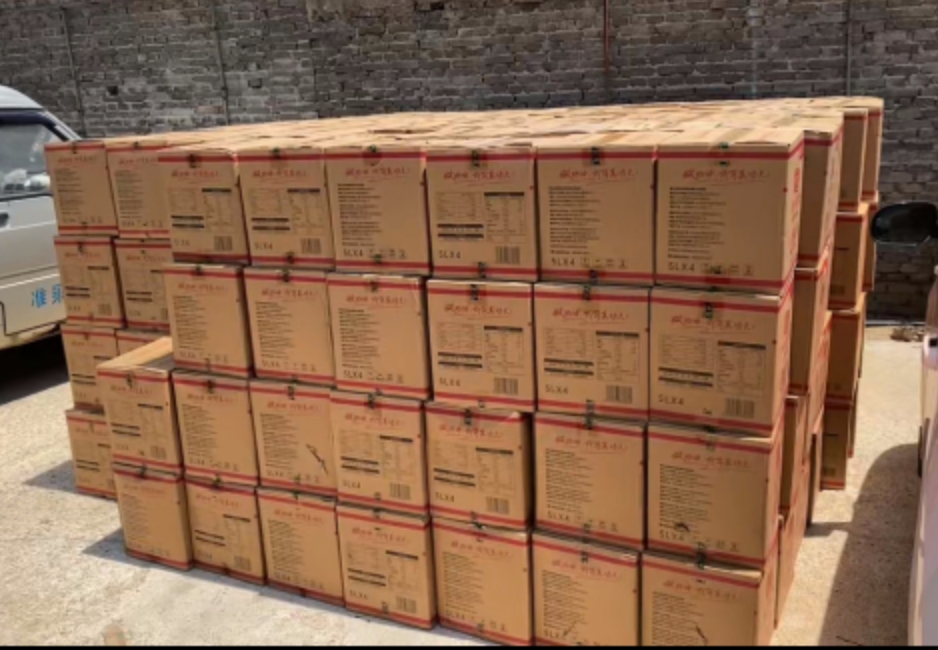
When inquiring about the peanut oil, Wang sent her a video showing stacked boxes of peanut oil as proof of inventory. On June 16, Wang gave her the warehouse address.
Ms. Liu said that because she had made multiple purchases before, with all transactions conducted by viewing goods offline and transferring money online without written agreements or receipts, she had no concerns. On June 16, she arranged for a Huolala driver to inspect and pick up the goods. The driver told her the warehouse indeed had 400 boxes of peanut oil.
Subsequently, she transferred 80,000 yuan to Wang via WeChat. After the goods were loaded, she transferred another 80,000 yuan to Wang's personal bank account, totaling 160,000 yuan.
But just as the truck was about to leave, warehouse staff stopped them, saying they did not know Wang and had not received payment. Ms. Liu immediately contacted Wang, but he made various excuses and did not directly address the issue.
Realizing she might have been scammed, Ms. Liu went to the Beiyuan Road Police Station of Linyi Public Security Bureau Lanshan Branch on the afternoon of June 16 to report the case. She said the police called Wang to demand repayment but failed. She hopes to recover the money as soon as possible.
Earlier, through other Sinopec Yantai employees, she found Wang's corporate WeChat account — he was a gas station attendant at Fushan No. 15 Gas Station under Yantai Petroleum Branch's Fushan Company. Ms. Liu said that when she contacted Sinopec's customer service hotline, the response was that this was an individual employee's conduct and had nothing to do with the company.
On the afternoon of June 24, The Paper contacted the person in charge of Fushan Company under Yantai Petroleum Branch, who responded, "The specific details are subject to the police announcement." When asked whether Wang was still an employee of the company, the person declined to disclose.
That same afternoon, a relevant staff member from Yantai Petroleum Branch told The Paper that Wang had indeed been an employee of the company, but they were not sure if he was still working there. They also revealed that the company's leadership was handling the matter.
On June 24, The Paper called the relevant police officers at Beiyuan Road Police Station of Lanshan Branch but obtained no effective information.
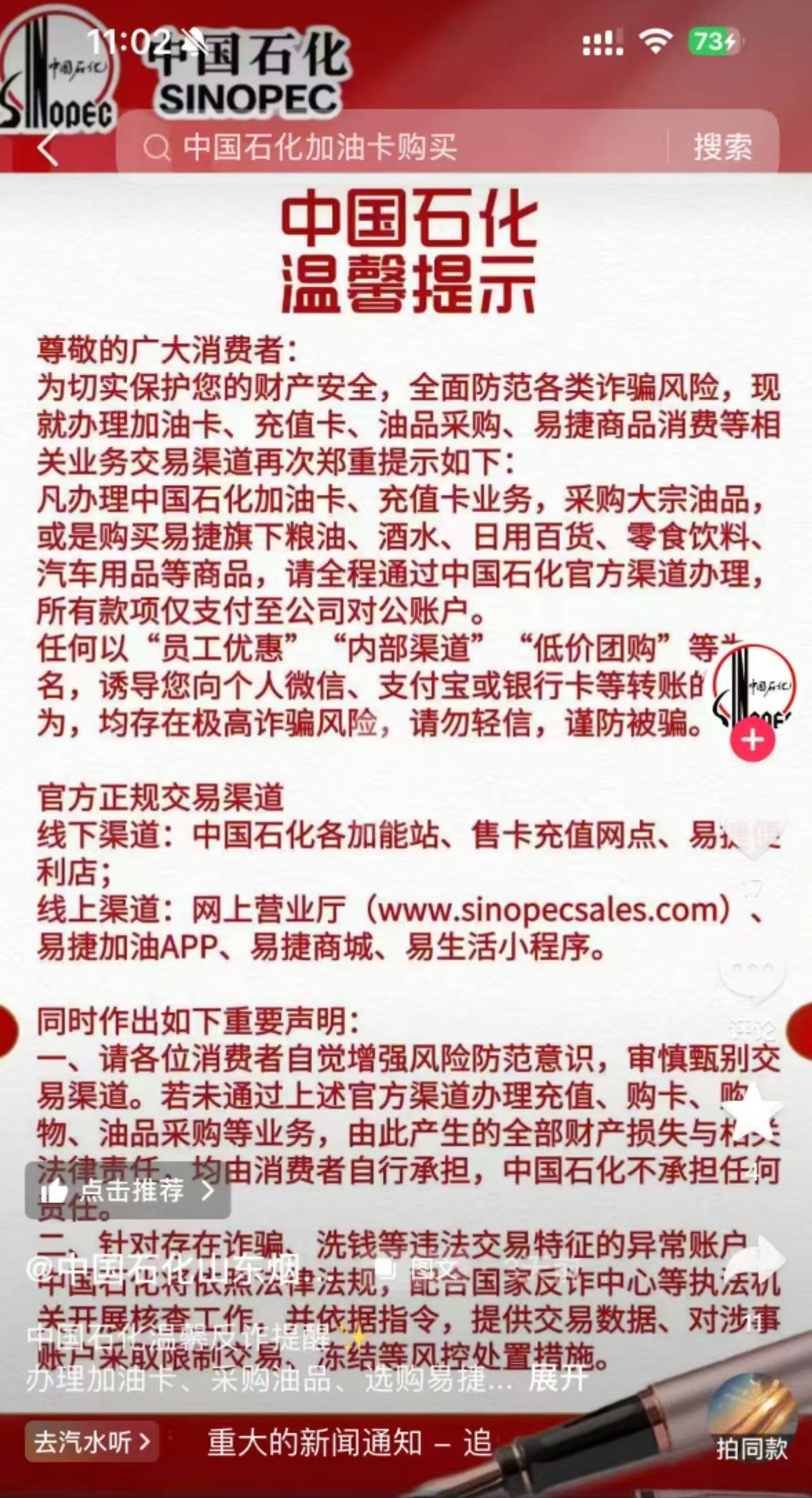
The Paper noted that on June 21, a Douyin corporate account named "Sinopec Shandong Yantai Petroleum Branch" posted a safety reminder stating that for any business involving Sinopec fuel cards, prepaid cards, bulk oil purchases, or purchases of Yijie-branded cooking oil, alcohol, daily necessities, snacks, beverages, and automotive supplies, all transactions should be conducted through Sinopec's official channels, and all payments should be made only to the company's corporate accounts. Any requests for transfers to personal WeChat, Alipay, or bank accounts under the pretext of "employee discounts," "internal channels," or "low-price group buying" carry extremely high fraud risk. The public should not trust such solicitations and should remain vigilant against fraud.