top-news
How to Remove the 'Hard, Dirty, and Tiring' Label from Frontline Manufacturing Jobs?
Starting in May 2026, the Changzhou Municipal Bureau of Human Resources and Social Security in Jiangsu Province conducted a city-wide special survey on the demand for skilled talent in key industries, aiming to align with the local industrial system's labor needs and identify gaps in the supply of skilled personnel. The survey identified 606 shortage positions, with a total planned recruitment of 4,277 people.
The survey report listed a variety of occupation types facing talent shortages — such as sewing machine operators and CNC machinists — and also highlighted the issue of "young people's low acceptance of frontline manufacturing positions."
These findings once again confirm the assessment that "the mismatch between labor supply and demand is the main contradiction facing China's employment sector." So how should we solve the coexistence of "people with no work" and "work with no people"? How can the "hard, dirty, and tiring" label attached to frontline positions be removed?
Breaking the “Unwilling to Enter the Factory” Employment Mindset
The report noted that through in-depth on-site visits to over 100 enterprises, the following common structural characteristics were identified: First, the intertwining of “can’t recruit, can’t retain” frontline positions with a youth talent断层; second, the coexistence of “misalignment between school learning and practical application” in school-enterprise cooperation and mismatched training cycles; third, the supply gap for复合型 talent created by smart manufacturing upgrades.
Solving these problems requires a two-way effort between enterprises and vocational education. On the enterprise side, working conditions must be fundamentally improved and wages raised to increase吸引力 for young people. At the same time, vocational education must deepen industry-education integration and school-enterprise cooperation to solve the “two separate systems” problem of talent cultivation versus social needs.
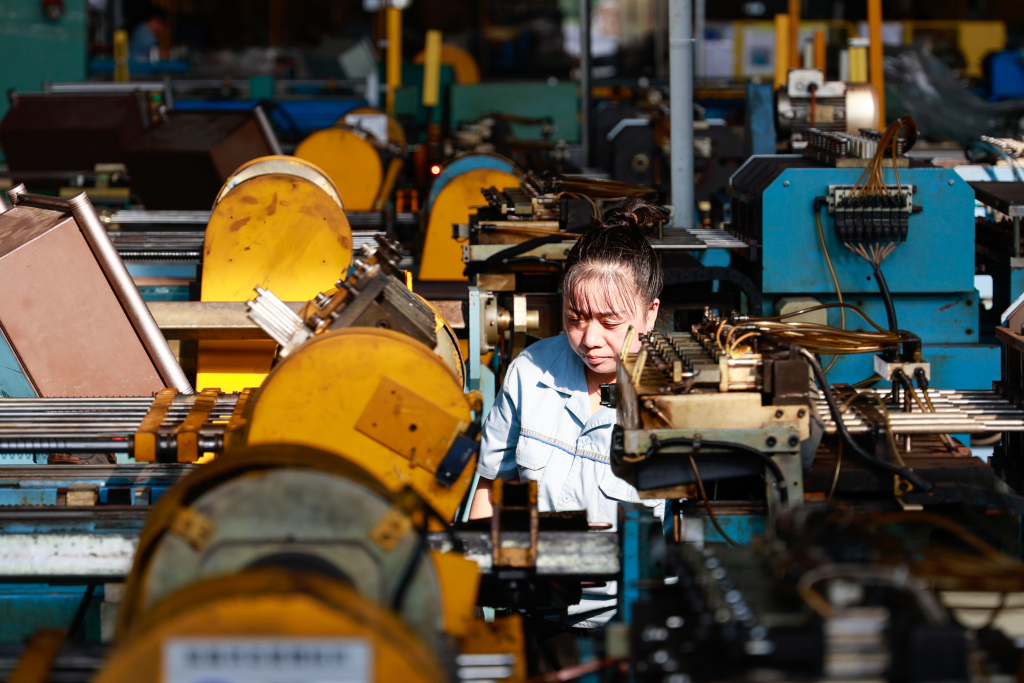
The report also noted that many companies reported extremely high turnover rates for positions such as CNC technicians, CNC operators, and sewing workers, with some companies seeing less than 10% retention of campus recruits within three months. Young people's low acceptance of frontline manufacturing jobs, combined with factors such as two-shift systems and harsh working environments, has left industries labeled as “hard, dirty, and tiring” facing serious risks of an aging workforce.
To retain the talent they have already recruited, manufacturing companies need to think from the perspective of young people about how to keep them. This includes, but is not limited to: raising wages to fully reflect society’s recognition of the value of skilled labor; improving working environments so that technical workers are not left doing枯燥, repetitive work in harsh conditions; and considering the characteristics of the younger generation by creating work environments and spaces suited to them.
Currently, some young people do harbor the idea of being “unwilling to enter the factory.” This is related to the “hard, dirty, and tiring” label attached to manufacturing, as well as societal misconceptions. Many young people feel that working in a factory means losing freedom and having limited social space, and they prefer jobs that offer greater flexibility.
As early as 2021, a survey by China Youth Daily showed that 63.97% of vocational college students surveyed would not choose frontline grassroots positions in factories, construction sites, or workshops after graduation, and only 32.8% found that their classmates would choose实体经济 jobs such as electricians or welders. This requires manufacturing companies to take into account the characteristics of young people, build a new type of corporate management culture, and create a working atmosphere that attracts young talent.
High-Quality Industry-Education Integration Becomes a “Rigid Need”
The report also noted a serious shortage in the market supply of positions such as smart production line operation and maintenance, AI visual inspection, and robot welding programming. The structural contradiction of “newcomers can’t operate smart equipment, older workers won’t learn new technologies” is prominent. Many companies reported an urgent need for复合型 talent who understand both automation and product processes — such talent is extremely scarce. This means that local manufacturing enterprises are already undergoing升级 and transformation, but there is no suitably matched talent available.
In the past, China has been借鉴 Germany’s “dual system” to promote industry-education integration, but the actual效果 has not been ideal,根本原因 being the low proportion of high-end manufacturing. However, as industrial升级 progresses, many manufacturing positions have long since摆脱 the “hard, dirty, and tiring” label, requiring not only higher skill thresholds but also offering wages that significantly exceed many white-collar positions.
It can be said that the intelligent upgrade of manufacturing enterprises has turned high-quality industry-education integration into a “rigid need.” China’s vocational colleges should take this opportunity to promote the formation of a virtuous cycle of “high-end manufacturing, high-quality vocational education, and high-quality skilled talent cultivation.”
In addition, the career values of young people also deserve attention. We need to reverse the problem of neglecting hands-on abilities and looking down on skilled occupations that exists in China’s school education, family education, and social education.
Objectively speaking, China has long had a social mentality of “revering academic degrees while disregarding skills.” This directly affects students’ choices regarding vocational education and skilled careers — when they encounter difficulties in skilled positions, they are unwilling to continue. Vocational colleges should use high-quality vocational education to reverse society’s偏见 against skilled talent and guide young people to form healthy career values. The current employment difficulties are partly due to the structural problem of graduates being “unwilling to take available jobs.”
In recent years, during the填报 of college entrance exam志愿, many students have chosen to give up better普通 schools to attend vocational colleges instead — a positive trend. We should follow this trend by promoting deep industry-education integration between manufacturing enterprises and vocational colleges, improving working conditions in manufacturing, raising the待遇 of skilled workers, and guiding young people to change their perceptions of skilled positions.