world
The Most Expensive World Cup in History: Why Are Fans Still Willing to Pay?
The USA-Mexico-Canada World Cup is in full swing, and amidst this football fever, fans are an indispensable part of the spectacle.
But as fans fill the stands, adding to the electric atmosphere, they are also contributing to FIFA's record-breaking revenues — the USA-Mexico-Canada World Cup has become the most expensive tournament in football history.
Sky-high ticket prices and hefty ancillary costs have sparked discontent among many fans. In interviews with The Paper, multiple fans said the cost of attending matches has risen sharply compared to previous editions.
Yet fans from around the world continue to flock to the USA-Mexico-Canada World Cup to experience the football feast in person. As the biggest IP in football — and indeed in global sports — the World Cup's appeal remains unshakable.
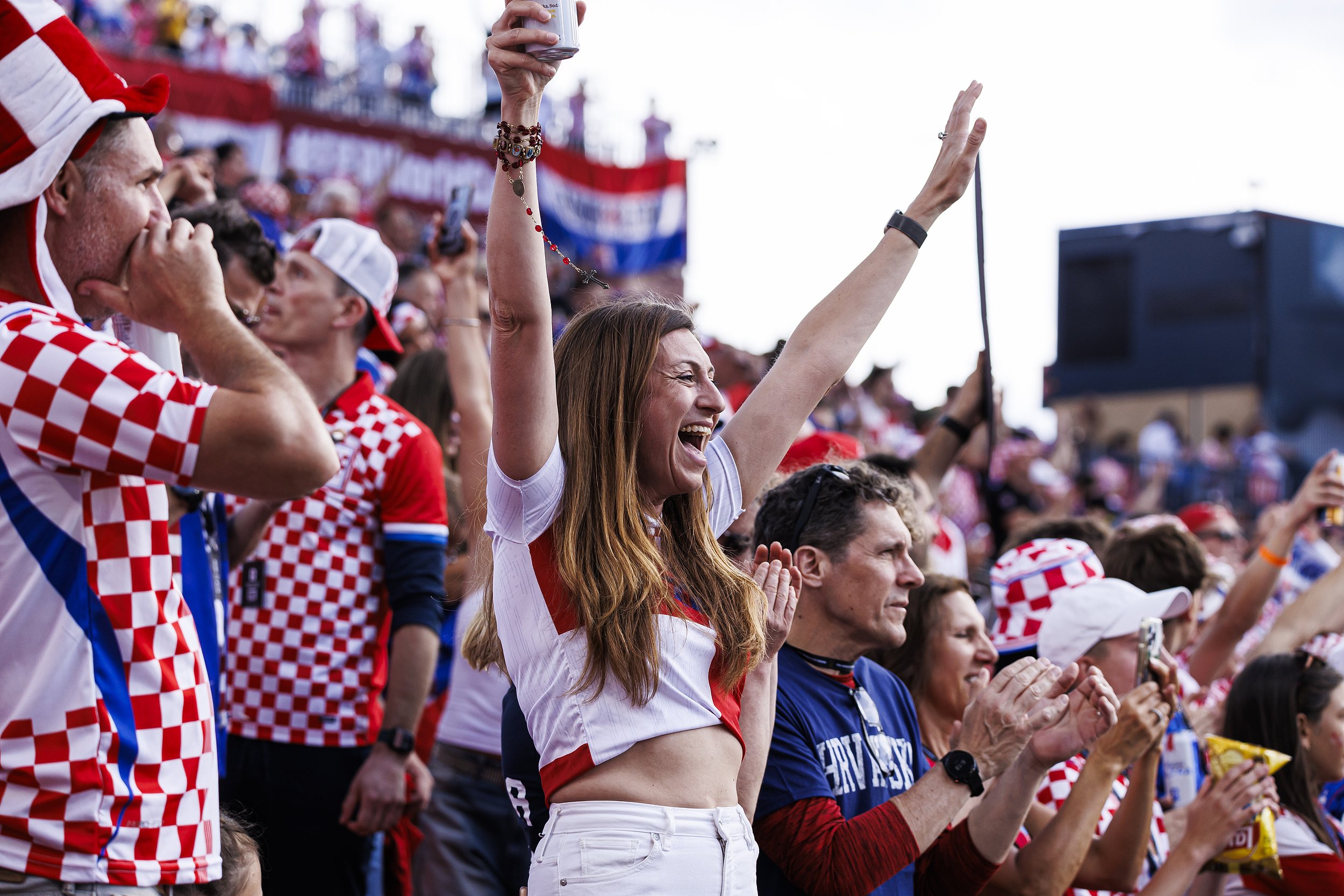
Fans are an integral part of football.
Not Double, But Many Times More
For this World Cup, FIFA has introduced a brand-new ticketing mechanism: instead of fixed prices, tickets are dynamically priced based on sales demand. The more popular the match, the higher the price — and it can keep rising.
Perhaps the biggest reason for this "innovation" is simply to sell more tickets at higher prices. Compared to previous World Cups, the surge in ticket prices for the USA-Mexico-Canada tournament is plain to see.
Mr. Lin, a fan, purchased tickets for a quarterfinal and a semifinal. The quarterfinal ticket cost nearly $2,000 (approximately ¥13,500), while the semifinal ticket was over $2,000.
Having attended the previous Qatar World Cup in person, Mr. Lin felt the price difference was enormous. He told The Paper, "I also watched a quarterfinal back then, and I had a front-row seat — I bought it from a resale website for about ¥2,000."
For this year's World Cup, official prices for good seats at the final exceeded $10,000, with premium seats costing over $30,000. Compared to the Qatar World Cup's most expensive official ticket of around $1,600, prices have not just doubled — they've multiplied more than tenfold.
Tickets for popular matches have been driven to sky-high prices.
But even with the soaring prices, Mr. Lin considers himself one of the luckier fans. He secured his tickets through the official lottery system. For those who miss out on official sales, the only option is the secondary market — where prices can be much higher.
Beyond dynamic pricing, FIFA has also established an official ticket resale platform for this World Cup, charging a 15% commission to both buyers and sellers. On the resale platform, one final ticket was listed for as much as approximately $2.3 million.
Of course, such an absurd listing is an extreme case, but for many popular matches, resale prices are indeed several times the official price.
"On average, tickets are about $2,000 each," said fan "Bao Ma Zhang Zhang" from Yixing, Jiangsu, to The Paper. "And that's just the average — for key matches involving popular teams, it's even more expensive."
He also noted that prices vary greatly depending on when and where you buy them, and you might occasionally find a better seat bought later for less. But overall, "compared to the Qatar World Cup, the tickets are really too expensive. The average fan simply can't afford it."
Fans from all over the world have converged on the USA-Mexico-Canada World Cup stadiums.
Thousands of Miles to Watch, with Plenty of Ancillary Costs
Compared to matches involving popular teams, tickets for less high-profile games are relatively cheaper. For example, Ms. Wang went to watch the group stage match between Australia and Turkey in Vancouver, Canada.
"The ticket cost about 600 Canadian dollars (approximately ¥2,872)," she told The Paper. "But if it's a Canada match, it's much more expensive — good seats cost around 2,000 Canadian dollars. Buying from secondary sites is a bit more expensive, but not too much."
Ms. Wang has lived in Vancouver for many years, so aside from tickets, she had no other World Cup-related expenses. But unlike her, overseas fans traveling to the United States to watch matches face many additional costs beyond tickets.
Transportation is a major expense. During the World Cup, round-trip flights between China and the US cost around ¥10,000. And beyond international travel, domestic transportation within the US is another significant cost.
For overseas fans, attending the World Cup in person is no small financial undertaking.
"The previous Qatar World Cup was held in a compact area, with stadiums relatively close to each other," said Mr. Lin. "But the US is huge — you have to fly between cities, and that's tiring."
Fan "Bao Ma Zhang Zhang" had the same experience. "The US has no high-speed rail, so travel costs are higher than in Qatar. Domestic flights in the US have also gone up during the World Cup." In addition, public transportation fares on World Cup-related routes in several host cities have also increased.
One fortunate thing, however, is that major US cities have well-developed hotel industries, giving them an advantage over Qatar in terms of accommodation supply. Hotel prices are not excessively inflated either.
"Brand hotels cost about ¥2,000-3,000 per night, which is reasonable given it's the World Cup and prices have gone up compared to normal times." Fans can also choose more affordable budget accommodations or B&Bs.
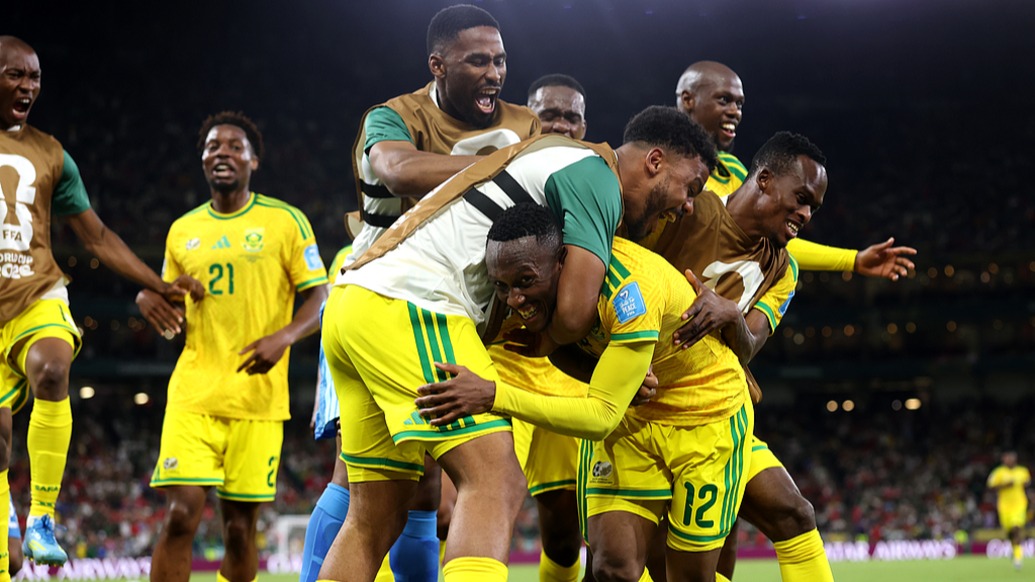
This World Cup has expanded to 48 teams, attracting fans from even more countries.
Traveling thousands of miles to attend the USA-Mexico-Canada World Cup in person, many fans also plan to take the opportunity to sightsee — after all, with flights and hotels already paid for, coming just for the matches feels a bit "uneconomical."
"I do have plans to travel as well," said Mr. Lin. "I've never been to the US before, so I'll definitely put together a travel itinerary."
"He plans to watch matches and sightsee in Los Angeles and Dallas first, then head to New York to soak in the final atmosphere." Together with his family, the two of them will have about 10 days total. Including tickets, transportation, accommodation, meals, and miscellaneous expenses, his total budget is around ¥100,000.
High ticket prices have not stopped fans from coming.
Feel the Passion, But Live Within Your Means
The stands are never short of passionate fans. During the previous Qatar World Cup, an Argentine fan said in an interview that he had spent four years of savings to attend the World Cup. "Many people will say he spent his money in Qatar instead of buying a house. But I'd say, they have a house, but they can't go to the World Cup."
Four years later, similar stories are playing out again. According to foreign media reports, one die-hard English fan put his £350,000 house on the market to fund his seven-week trip to the USA-Mexico-Canada World Cup.
But such devoted fans are a minority. For most people, faced with the high costs of attending the World Cup and traveling, it's important to live within one's means.
"Watching the World Cup isn't about how much you love football — it's about your financial situation," said fan "Bao Ma Zhang Zhang." As an Argentina fan, he plans to follow Argentina's matches throughout the tournament. Since the trip may be longer, his total budget is higher — "probably around ¥200,000-300,000."
不过能够做到如此投入的球迷毕竟只是少数,对于大多数人来说,面对高昂的世界杯看球和旅行开销,还是需要量力而行。
"看世界杯考虑的不是对足球有多热爱,而是要考虑经济基础。"球迷"饱马璋璋"表示。作为阿根廷球迷的他,这一次准备追着阿根廷在世界杯的比赛走,因为时间可能较长,总预算也较高,"估计二十几万差不多。"
现场看世界杯是许多球迷的愿望。
而这是他选择一人来到美国看球规划的开销,如果带上家人,成本还会更高。最终出于对足球和阿根廷队的喜爱,他开启了这次旅程。
对于不少球迷来说,现场观看世界杯始终是一种独特而美好的体验,就像球迷林先生所说,"我从小就喜欢足球,第一次看世界杯是1998年在家里的电视上,在那之后,每届世界杯都感觉会有一种期待。"
"(现场看世界杯)和在电视上又确实很不一样,更能体验到不同国家球迷的文化,每次来到球场大家也都很开心,像是一场大聚会,特别轻松愉悦。所以在去过卡塔尔世界杯之后,就喜欢上了这种现场的感觉。"
据官方统计,6月22日4场比赛的现场观众人数共有288007人,刷新了世界杯历史单日观众人数纪录。
在温哥华观赛的王女士并非球迷,本届世界杯的比赛还是她第一次现场看球,但这"凑热闹"的惊鸿一瞥,也让她感受到了足球的魅力,"感觉很兴奋,也觉得足球挺好玩的。以后可能还会去看看美国足球大联盟温哥华白浪队的比赛。"
全世界球迷对世界杯乃至足球这项运动的趋之若鹜,正是国际足联不断涨价的最大底气。据国际足联预计,美加墨世界杯周期的四年总收入将达到130亿美元,比上个世界杯周期增长72%,其中世界杯赛事的转播、门票与赞助收入约占到四年总收入的69%。
美加墨世界杯的扩军与"昂贵"引发了不少争议和批评,但却无法阻挡现场观众人数刷新历史纪录。至少从当下来看,这只"下金蛋的鹅",仍是全球体育界最为肥美的存在。