world
Will the UK Rejoin the EU Ten Years After Brexit?
On June 23, 2016, in a closely contested referendum, the UK's "Leave" camp won by a razor-thin margin of 51.9% to 48.1%, marking the beginning of Britain's separation from the European Union.
Ten years on, according to Xinhua News Agency, a survey released on June 21 by the European Council on Foreign Relations shows that a majority of British voters now believe leaving the EU was a "mistake," with negative impacts on nearly every issue they care about.
Among respondents, 57% said the Brexit decision was wrong, 13% answered "don't know," and 30% considered it "correct." As for the main benefits of Brexit, the vast majority of respondents answered "don't know" or "none of the options given."
Over the past decade, the UK has experienced a series of economic and political upheavals. Growth potential has been affected, UK-EU trade faces stricter checks, multiple industries report no substantive gains, and immigration issues have worsened.
During this period, the UK has seen six prime ministers come and go, the latest being Keir Starmer, who announced his resignation on June 21. Although he worked to steer UK-EU relations back on track, the multiple agreements currently under negotiation cannot compensate for the losses caused by Brexit, and disagreements persist on parts of those agreements.
After Starmer's resignation, Andy Burnham — who was sworn in as MP for Makerfield on June 21 and previously served as Mayor of Greater Manchester — is considered a leading candidate for prime minister. Paul Webb, a politics professor at the University of Sussex, told The Paper that while rejoining the EU single market or customs union would significantly boost the economy, Burnham will face the same objective pressures as Starmer due to Labour Party policy constraints, making it difficult to make sweeping promises on UK-EU relations.
On the tenth anniversary of the Brexit referendum, numerous media outlets have reflected on and discussed this historically significant and globally impactful event. Some argue the UK could look to the Swiss model — not joining the EU but forging deep integration through bilateral agreements. Others note that divisions between the UK and EU existed before Brexit, British public opinion may not be ready for rejoining, and Europe itself now faces a host of new realities.
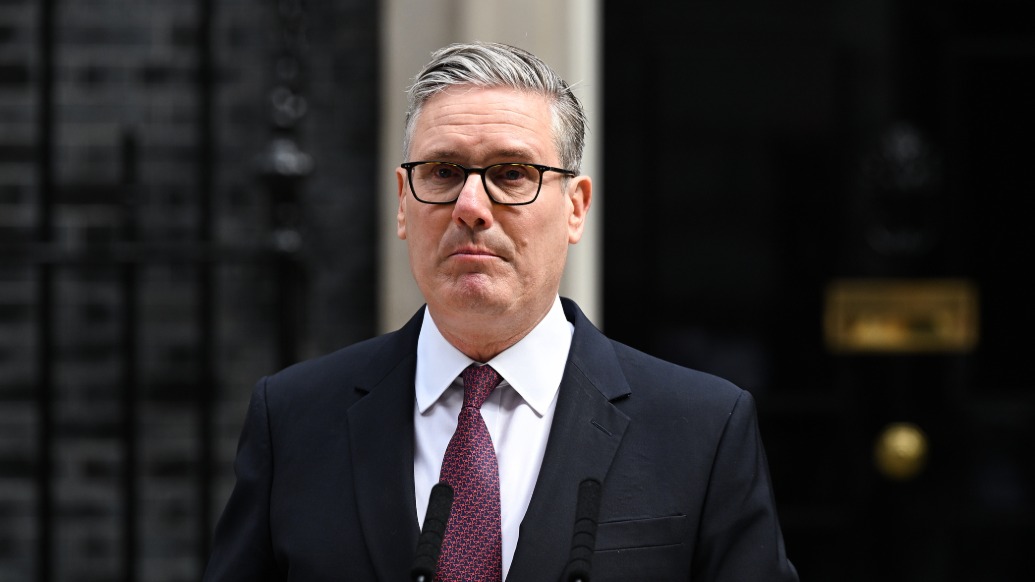
On June 22, 2026, London, UK — British Prime Minister Keir Starmer leaves the podium after delivering his resignation statement on Downing Street. Photo by Visual China.
What Has Brexit Brought to the UK?
In the view of Brexit supporters, Europe was holding Britain back, and the UK was destined for greater things. They believed Britain could finally abandon the austerity policies that followed the 2008 global financial crisis, reverse the hollowing out of high-paying manufacturing jobs, and engage freely in profitable trade on the international market. Immigrants from Eastern and Central Europe would be sent home.
However, the referendum was only the beginning of a painful process. Although the UK has not experienced worst-case scenarios like an economic recession or housing market collapse, economists widely agree that Brexit has negatively affected the UK's growth potential — estimated GDP losses of 2% to 8% — while damaging business investment, lowering productivity, and reducing living standards.
In the years following the Brexit vote, UK-EU relations were fraught with uncertainty as both sides argued over the terms of their future trade relationship. It was not until January 2020 that the UK formally left the EU. After an 11-month transition period, the two sides signed the EU-UK Trade and Cooperation Agreement at the end of that year. For businesses, this meant a mountain of paperwork, from customs checks to border inspections.
"It's been an absolute nightmare, total chaos, and it remains so to this day," said Tony Rutherford from the village of Appledore in northwest Devon, who told the Guardian he had supported Brexit in hopes of protecting the UK's local fishing industry.
Rutherford has run a local business since 1979, buying from fishermen and reselling to wholesalers, and even appeared on a poster for the right-wing populist UK Independence Party (UKIP). His constituency of Torridge and West Devon voted 57% in favor of Brexit.
But after Brexit, Rutherford's fishing fleet saw almost no increase in fishing opportunities. From January 1, 2021, he faced sharply higher export costs, and the piles of paperwork he had prepared proved useless. Worse still, when shipping his first post-Brexit batch of fish to France, the cargo was held up for five days due to documentation issues.
"First, you have to register for VAT in France," Rutherford said. "You have to hire a French accountant to handle this for you. That costs £2,000 a month." And other expenses: "You need a health certificate, £85 each time. You need a transport company to handle import documents, £245 each time. So each shipment costs an extra £330."
If the concrete costs of Brexit are hard to quantify, the promised benefits — less regulation, lower immigration, more public service funding, and new major trade deals — are even more uncertain.
Official UK data shows that compared to the £856 billion in annual UK-EU trade, the new trade deals Britain has struck with Australia, New Zealand, India, and Japan are negligible.
On immigration, according to Oxford University's Migration Observatory, since the post-Brexit immigration system took effect in 2021, net migration to the UK has averaged 550,000 per year. In 2023, the figure reached nearly 950,000, a record high, driven by a surge in non-EU citizens. It has since fallen sharply with new policies. By contrast, the figure was just 250,000 in the 2010s.
In Webb's view, the 2007-2008 financial crisis was the start of current problems, and Brexit worsened the UK's economic outlook, making it harder to attract investment, reducing trade levels, and creating labor shortages in certain sectors.
Michael Saunders, senior advisor at Oxford Economics and a former Bank of England official, noted that Brexit has persistently reduced government revenue, forcing higher taxes and spending cuts.
John Major, who served as prime minister in the 1990s and tried to resist anti-European forces within his own Conservative Party, bluntly stated that Brexit has made the UK poorer and weaker. "Britain was once proud of being a major EU member state and America's most important ally as the world's most powerful superpower. Today, we are neither, and the whole world knows it," Major said in a speech last year.